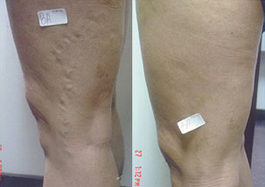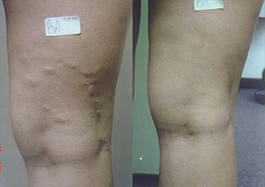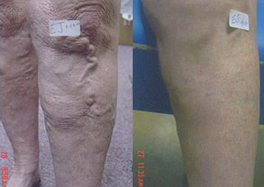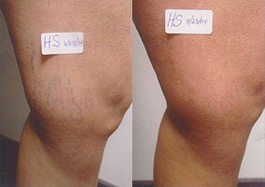
3 Steps for managing Varicose Vein Disease
Every person’s vascular situation is different. That’s why it’s important to have a exam and treatment from a doctor who specializes in diagnosing and treating venous disease. STEP 1 – Diagnosis Using ultrasound technology, we are able to view the…
Sclerotherapy – Legs and Beyond
While sclerotherapy is most commonly used to treat veins on the legs, this procedure can be used to treat veins in other areas of their body as well. Treatment can be very successful for enlarged veins on the backs of…
Phlebologist vs. Phlebotomist
Although the two words have only 2 letters that are different, there is an enormous difference between a Phlebologist and a Phlebotomist. A phlebotomist is a healthcare professional who is trained to draw blood from a patient for lab tests…
Athletic Compression for Athletes
Think compression socks are ugly, uncomfortable and just for your grandparents? Think again! While this type of sock was originally used in a medical setting to help with healing, compression garments are becoming increasingly popular with athletes. Many compression stocking…
Understanding Venous Problems
To understand venous problems, it’s helpful to know about the anatomy and physiology of the venous system. Here is an explanation of the different types of veins and how they function. What is the difference between an artery and a…
Sclerotherapy – How Many Treatments will I need?
If you suffer from spider veins, sclerotherapy may be an optimal solution for you. Sclerotherapy is a vein injection treatment used to eliminate spider veins on the legs. The veins are injected with a concentrated solution using a very small…
Dietary Fiber & Varicose Veins In Orange County, CA
Can a High Fiber Diet Prevent Varicose Veins Chronic venous insufficiency and varicose veins appear to be related to a Western diet that is low in dietary fiber. There’s evidence that suggests avoiding this risk factor may help reduce the…
How Are Varicose Veins Diagnosed
Dr Leary will diagnose your varicose veins based on a physical exam. He will look at your legs while you’re standing or sitting with your legs dangling which allows the veins to dilate. He will ask about your symptoms, including…
Preparing For Your Vein Appointment
There are no special preparations you’ll need to make before your appointment. Dr. Leary will need to look at your bare legs and feet to diagnose varicose veins and determine what treatment would be best for your condition. We have…
Night Leg Cramps
Night leg cramps are painful, involuntary spasms, aching or contractions of muscles in your legs. In many cases, night leg cramps involve your calf muscles, but muscles in your thighs or feet may cramp as well. Most of the time,…